In Mewari (local dialect), magra means a hillock. Across the rural stretches of southern Rajasthan, villages sit on and around these magras, drawing life from them. For the villages that live alongside them, magras represent something bigger than a landform.
Pipliya is one such village.
When the Forest Was Left Behind
In 2008, the forest department undertook conservation work on 50 hectares of government forest land near Pipliya-building boundary walls, trenches, check dams, gully plugs, pits, and planting saplings. The department maintained the area until 2014. In 2015, similar work was carried out on another
50 hectares, which was opened for public use in 2020.
Once departmental maintenance ended, uncertainty loomed over the future of the forest.
The risks were many: illegal tree cutting, excessive grazing, forest fires, soil erosion, and growing pressure on forest resources due to limited livelihood options. With official monitoring withdrawn, the question remained-who would now take responsibility?
The people of Pipliya decided they would.
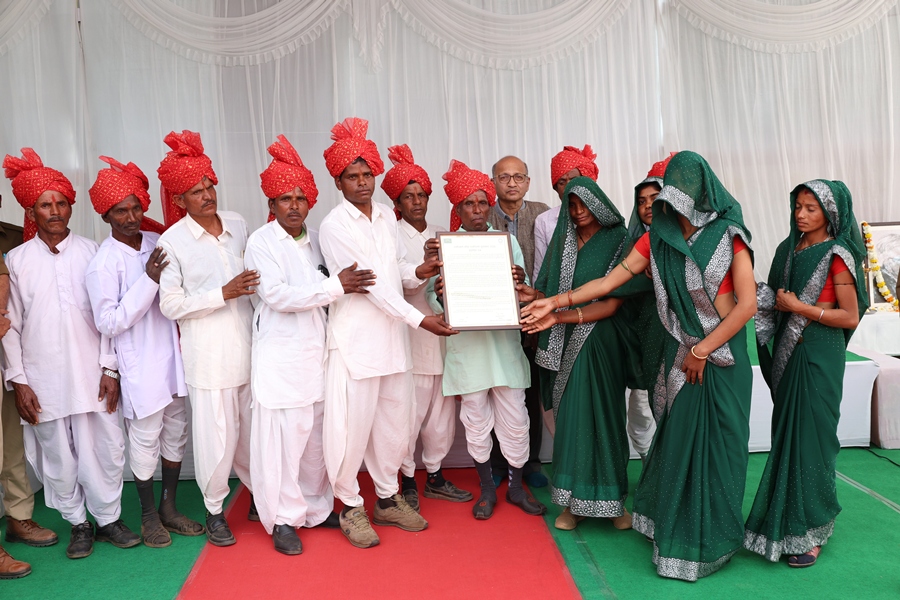
The community of Pipliya won the Ummedmal Lodha Award 2026 for their work in the area of conservation and protection of natural resourcesBecoming the Guardians
Out of nearly 300 hectares, the village collectively takes care of around 100 hectares of forest land. Though they did not have legal rights over it for many years, conservation, for them, was not new-it was inherited.
"Our forefathers were determined... better to die than to get the forests cut. Jungle gives us everything-the wind, the rain. The temperature of our village remains pleasant because of the jungle only," said Shivram, a member of the Gram Vikas Committee (a community institution made with the support of Seva Mandir).
Everyday practices of care
Pipliya is a small village of about 250 families. Despite limitations, the village is clear about its priorities. Every June, villagers gather to collectively decide the steps needed for forest conservation. Surveillance has become second nature. Men travel daily to Udaipur for work, and as they pass on their motorcycles, they scan the forest-watching for signs of encroachment. This alertness, practiced twice a day, has become habitual. Women, meanwhile, maintain a daily relationship with the forest through collecting grass and fodder.
Since 2015, there has been no encroachment in this area.
In 2023, villagers initiated the process of securing Community Forest Resource (CFR) rights. his effort led to CFR rights being granted for 11 hectares. Though this covers only a portion of the land they protect, it has not diminished the forest's value in their lives.
Once a year, villagers come together for shramdaan (contributing their labour)-repairing boundary walls, restoring anicuts, or tending to damaged structures.
But conservation also demands readiness for the unexpected.
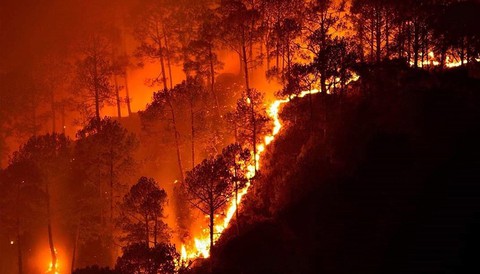
Forest fires are common during extreme heat, and sometimes human-induced. The alarm is immediate. A sharp, repetitive ulululu cuts through the air. "Daudo bhai,"-run. And the village runs to put it out.
Unity is the Strategy
Protecting the forest has also meant making difficult decisions. Entirely composed of the Bhil tribal community, Pipliya has decided that no outsider can buy land in the village.
The village remains clear about its duty.
"Jungle ki suraksha hamare doodh mein hai," (Protecting the forest is has been in the milk that we were fed) one man says.
"Magra hi mai-baap hai," adds another. (The hill is our mother, our father)